



What Happens When We Stop, Touch the Ground, and Pay Attention - An Interview with Artist James Brunt
Feb 24, 2026
Soil is often discussed in terms of productivity, protection, or crisis. Rarely is it spoken about as something we experience - something we notice, touch, and respond to in real time. Yet before we can care for soil, we first need to see it. Pay attention to it. Feel our relationship with the living ground beneath our feet.
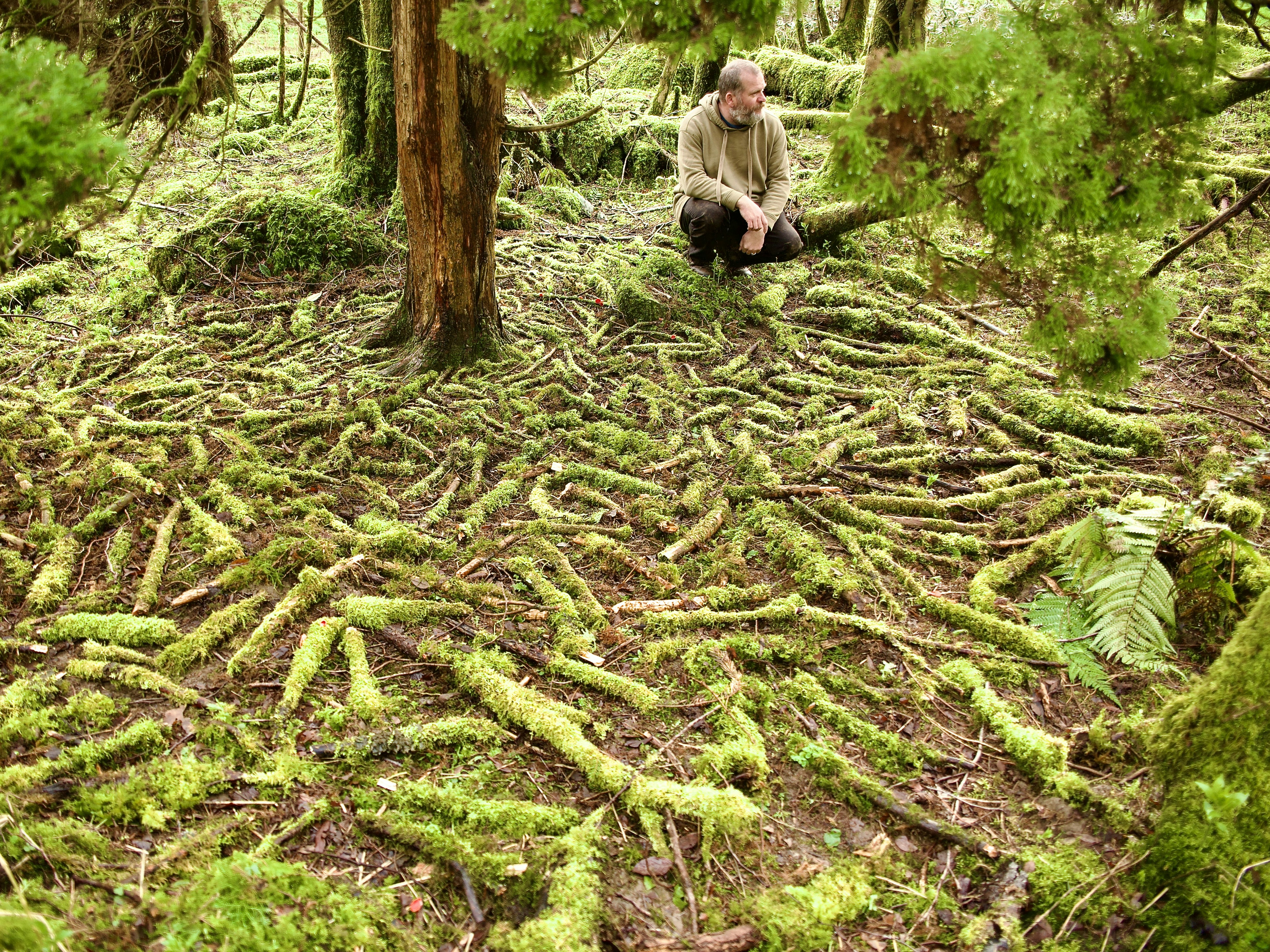
James Brunt’s work begins exactly there. Working outdoors with natural materials, he creates temporary artworks that are not meant to last. Leaves, stones, sticks, earth - arranged through slow, attentive processes - eventually return to the land they came from.


This way of working holds a quiet but powerful relevance for soil awareness. It reminds us that soil is not just a resource or a surface, but a living participant in every process of growth, decay, and renewal. Through his art and the workshops he facilitates, James invites people to slow down, notice what is there, and reconnect with the ground as something alive, responsive, and worthy of care. In this conversation, he shares how creating with land became a way of living, and how curiosity, play, and attention can gently reshape how we relate to soil, nature, and ourselves.
For those who are just discovering your work: can you share how you first began creating art with natural materials and landscapes? What drew you to working this way, and what keeps you coming back to the land as a place of creation?
The journey to working and creating outside was the result of a long slow realisation that I am much happier, much more connected when outdoors immersed in natural surroundings. After studying fine art in the late 90’s and plodding through a series of genres from painting to sculptural and conceptual work and not feeling particularly fulfilled by any of them, creating outdoors for the first time was like the switching on of a light. Everything made sense, to be satisfying my urge to create, in the places that so positively impact on my mental health and wellbeing.
From that moment 15 years ago, I’ve been on a learning journey of creating hand in hand with nature. Looking closer, noticing more and deepening awareness and understanding of both me and the world around me.


Through your work, nature and soil appear not just as a source of material, but as something you work with. How do you experience that relationship while creating, and how does the place itself influence what eventually takes shape?
The relationship with the land is critical from the outset. I enter the woods or the beach with no idea what I will create or what the land will present me with. I don’t approach natural locations with the mentality of “I’m going to create this today and do it there.”
My process involves a good deal of aimless wandering, waiting for the land to capture my attention and pique my interest. That might be a wider composition that creates a natural frame or backdrop, or a small piece of woodland floor where, for that moment, the elements have aligned to invite me in.
For a short time, I feel like I’m embedded into the story of that piece of land, like the curious birds that land on a branch above to observe. The creative process is simple, often driven by repetition, with no idea how it will play out. I don’t want to fill my mind with creative decision-making that clouds the relationship with place, time, and land. I’m there to be part of it, to grow with it, not to impose a predetermined idea onto it.
Much of what you create depends on what lies beneath the surface, the ground, the soil, the textures and stability of a place. How aware are you of soil when you work, and what role does it play in shaping what’s possible in your art?
I’m deeply aware of all the elements that form part of a work creation experience. The experience is everything for me, far more than the resulting outcome that others connect with. I have no relationship with finished works and walk away immediately, open to the next invitation that comes my way.
I hate the thought of anything that blocks connection to the experiential act of creation. I want to feel and be marked by the process. No tools are used. If it’s not possible for my hands to create, it doesn’t happen. No gloves that block connection to land and material, no coat that shields me from the weather. If it rains, I want to feel it.
Connection to the land, the materials I’m working with, the soil that temporarily accepts my play, this is my version of meditation and spiritual understanding. It’s a reminder that everything is equal and of value. Though the work can be physically demanding, the overwhelming feeling is one of calm, joy, and gratefulness for having this relationship with the land.


Your art is ephemeral. It shifts, fades, and eventually returns to the landscape. What has working this way taught you about letting go of control, being present in the moment, and valuing the process as much as the outcome?
The idea of impermanence sits perfectly with who I am. Control and power are alien to me, and I don’t see much positivity in those who wield it. Artistically, I don’t have the attention to spend weeks critically thinking, devising, and planning work. It just doesn’t appeal.
Responding to what’s in front of me and creating in the moment is when I feel most in tune with my creative urges and therefore most productive. I’m aware this may limit certain opportunities in the wider art world, but it also means I rarely have to change my practice to fit someone else’s agenda.
I’m comfortable with the idea of my work as play. As it changes and fades, it still exists, just in a different form. One day others will interact with it knowingly or unknowingly. Until it becomes soil, on which future works may sit, it’s there somewhere waiting to be found again. That feels far more appealing than striving to create something that lasts.

Whether you’re creating on a beach, in a forest, or elsewhere, conditions are never the same. What has working so closely with nature and soil taught you about adapting when things don’t go as expected?
The weather has always been a partner in every work I’ve made. It dictates what is and isn’t achievable, disrupts plans, and transforms the ground I work on. Over the years I’ve learned to read it, to understand when to adapt and when not to bother trying.
I think I’ve developed an intuitiveness in relation to my work that others may not immediately see or understand. The locations I choose may not appear obvious, but the relationship I have with land and space tells me otherwise.
There’s a playful, curious quality to your work that invites people to slow down and notice what’s around them. How important is curiosity, perhaps even a childlike way of seeing, in helping us reconnect with nature and the living world beneath our feet?
If the one thing people take away from working with me is to make more time for play, for the things that truly make them happy, then I’m a very happy person. The more people spend time doing what genuinely brings them joy, the healthier we become as individuals, communities, and eventually societies.
Unfortunately, our education systems don’t value curiosity and play as we get older. For many, it gets lost and life becomes a grind. I hope my work shows people that it’s not too late. Play is still there, and it’s free for all of us.

When you spend time creating in a place, does the landscape ever reveal something to you over time? What becomes visible when we slow down enough to listen?
Absolutely. The key is being open to what is already there. One of the most common things adults say after a workshop is, “I would never have noticed that.” And yet it was always there, waiting to be seen, felt, or heard.
If my work can gently encourage people to change how they move through their daily lives, that feels like a privilege. It has the potential to change lives, and that begins with paying attention.
What is one small way people could bring more attention and presence into their everyday relationship with the ground or with nature?
I think we need to change the neural pathways that have formed after years of a certain lifestyle. Pathways that have lost connections to land and nature. We are happy to get a nature fix from the screen of our TV. The simple act of repetitive experiences outside surrounded by nature, with our feet on the ground, looking closer, noticing the small stuff, touching, feeling and breathing it in. Developing new neural pathways that become our new normal, allowing ourselves to be closer connected to the life that we share the planet with, building a more conscientious way of being through love and respect for everything around us. Do this and we begin to shield and protect our planet from the threats of power and greed.


LET US MAKE IT HAPPEN!